


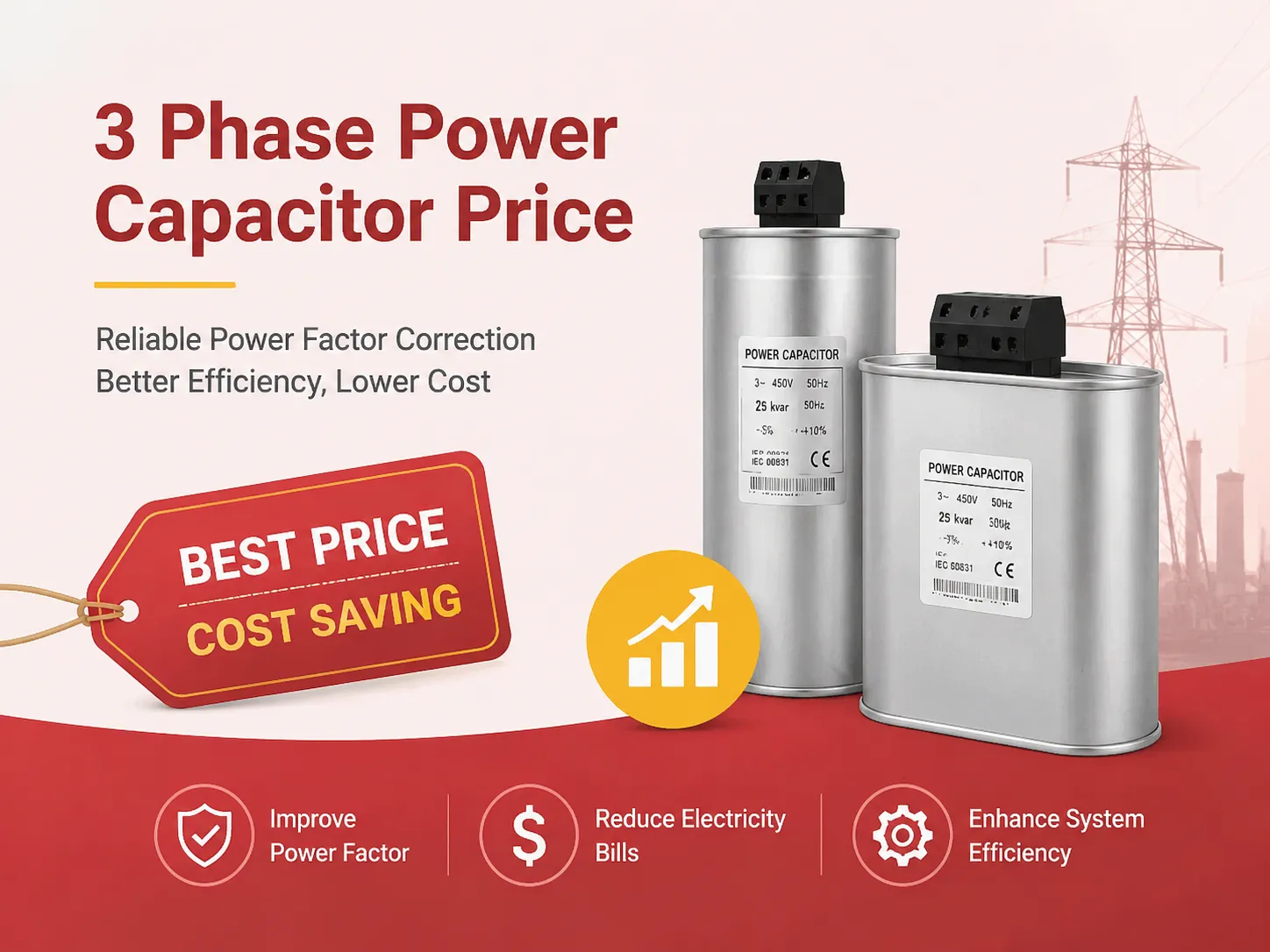
The question about price of three phase power capacitors is one of the first queries most buyers have. The costs for these capacitors can significantly differ based on various factors such as the actual capacitor size and capacity, voltage rating, brand, application environment, whether it is a single capacitor unit or a capacitor bank system.
Overall, the price of a 3-phase power capacitor varies from about $50 to multiple thousands of dollars. The price of a small capacitor that is used for simple power factor correction is likely to be only hundreds or tens of dollars, while that of a massive industrial capacitor bank made for manufacturing plants and power distribution systems is likely to be thousands of dollars.
When customers can define the reasons for the pricing gap, they are able to make the right choice concerning the product, which prevents paying or selecting an inappropriate solution.
The content of this guide covers details about three-phase capacitors pricing, types of capacitors out there, specifications and brands that differ in price, the usage of different kinds of capacitors, and the best approach to determine which capacitor will suit your system the best.
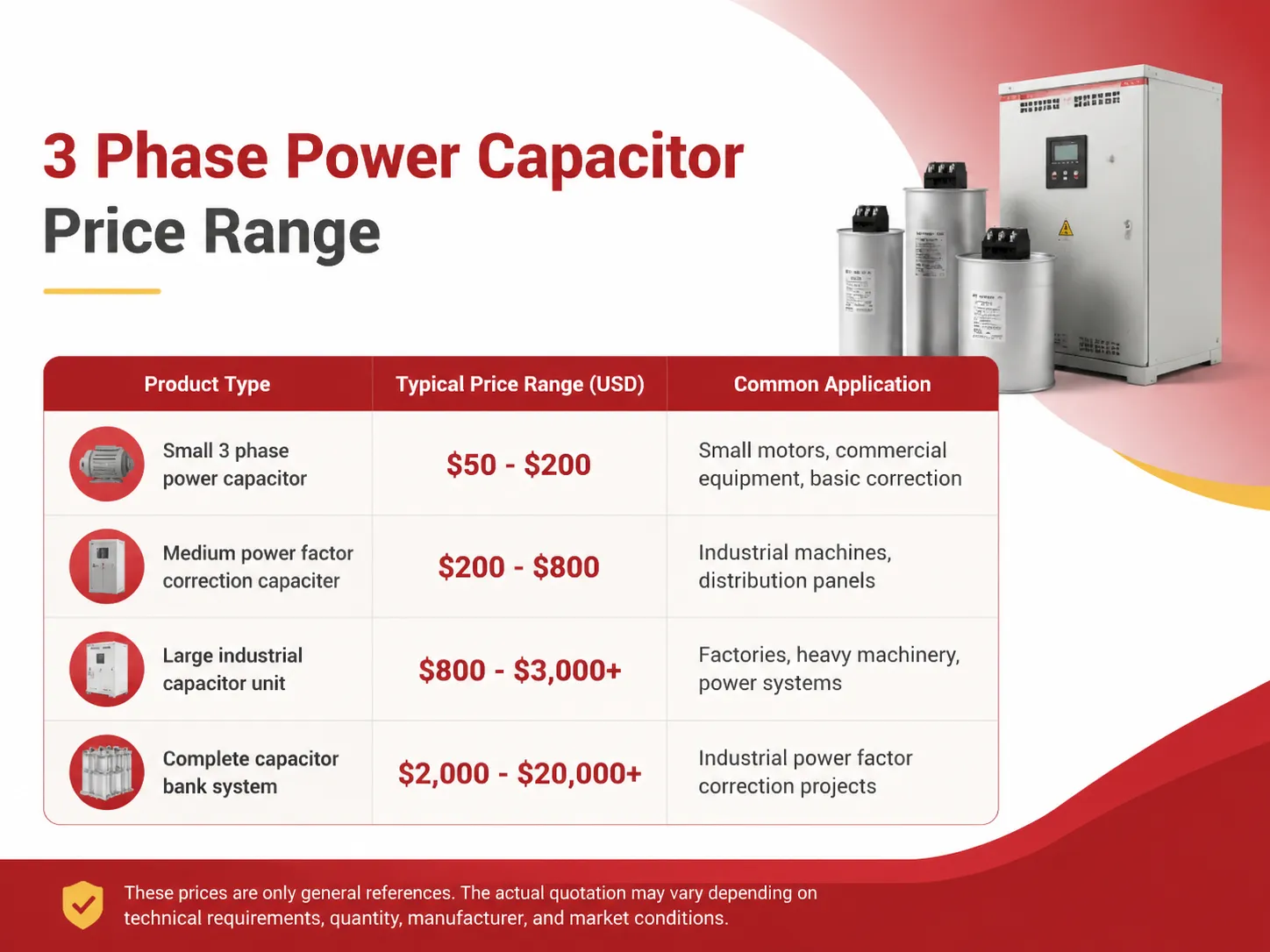
3 Phase Power Capacitor Price Range
The price of a three phase power capacitor depends mainly on its electrical rating and application. Below is a general market reference:
| Product Type | Typical Price Range | Common Application |
|---|---|---|
| Small 3 phase power capacitor | $50 – $200 | Small motors, commercial equipment, basic correction |
| Medium power factor correction capacitor | $200 – $800 | Industrial machines, distribution panels |
| Large industrial capacitor unit | $800 – $3,000+ | Factories, heavy machinery, power systems |
| Complete capacitor bank system | $2,000 – $20,000+ | Industrial power factor correction projects |
These prices are only general references. The actual quotation may vary depending on technical requirements, quantity, manufacturer, and market conditions.
What Is a 3 Phase Power Capacitor?
A three-phase capacitor is designed to improve three-phase power systems and their performance through the compensation of reactive power.
A number of industrial electrical loads including motors, pumps, compressors and transformers utilize reactive power for generating magnetic fields. Even if such reactive power is important for functioning, it cannot directly be considered as work producing energy.
A power capacitor helps meet a portion of this reactive load locally, thus reducing the quantity of reactive power pulled from the power grid.
In straightforward words, a three-phase capacitor enables the electrical system to save energy and use it in a better way.
Why Do You Need a 3 Phase Power Capacitor?
The prime objective behind the installation of a three-phase capacitor is to enhance the power factor as well as eliminate unnecessary losses of electricity.
Low power factor leads to high flow of current through the electrical systems. This ultimately causes loss of more energy in the cables, transformers and distribution equipment.
A properly selected capacitor can provide several benefits:
- Improve power factor: Helps electrical systems operate closer to their ideal efficiency level.
- Reduce electricity costs: Helps avoid reactive power penalties charged by some utilities.
- Increase system capacity: Reduces unnecessary current demand on electrical equipment.
- Improve equipment performance: Reduces stress on transformers and distribution components.
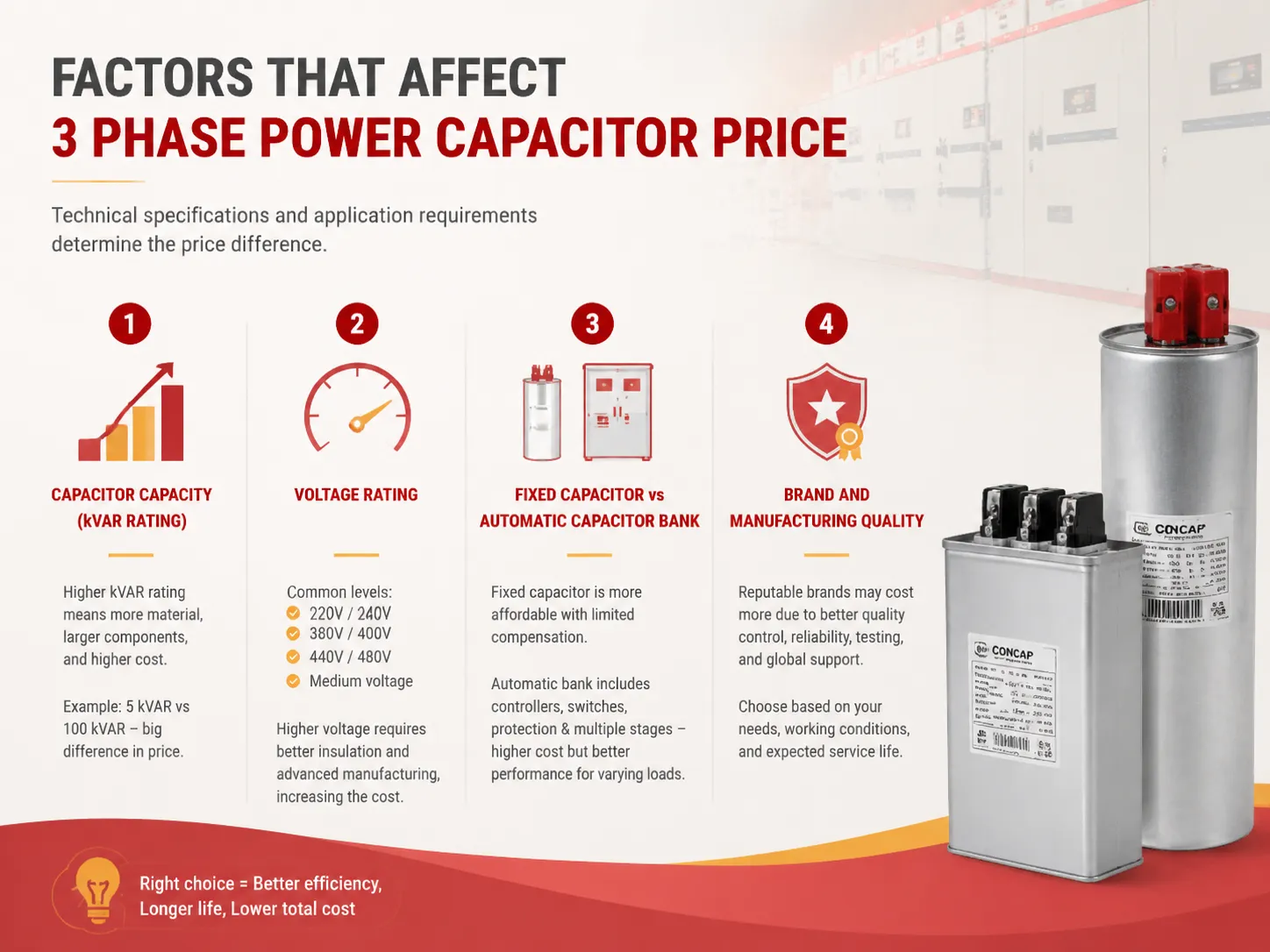
Factors That Affect 3 Phase Power Capacitor Price
The technical specifications and application requirements are responsible for the discrepancy in price among three phase power capacitors.
1. Capacitor Capacity (kVAR Rating)
The most important factor affecting price is the reactive power capacity, usually measured in kVAR.
Smaller capacitor which is rated at lower kVAR will use less material and will be cheaper. Industrial capacitors rated at higher kVAR will use larger internal components and stronger architecture.
As an illustration, a capacitor with a capacity of 5 kVAR and one with a capacity of 100 kVAR might be utilized in various procedures and possess considerable variations in terms of costs.
2. Voltage Rating
Voltage rating also has a significant impact on the cost of a three phase power capacitor.
Common voltage levels include:
- 220V / 240V systems
- 380V / 400V systems
- 440V / 480V systems
- Medium voltage applications
Capacitors with high voltage necessitate the use of enhanced insulation design and more sophisticated manufacturing processes, that means that the cost of these capacitors is increased.
3. Fixed Capacitor vs Automatic Capacitor Bank
One fixed-sized capacitor is normally more affordable because it only provides limited compensation.
An automatic capacitor bank consists of controllers, switching devices, protection components, and many capacitor stages. However, this increases the cost.
However, automatic systems provide better performance for electrical loads that change frequently.
4. Brand and Manufacturing Quality
Pricing can also be influenced by brand reputation. Generally, international makers demand a price premium because they implement better quality control, reliability, test processes, and international service network.
Nonetheless, paying more doesn’t necessarily guarantee the best option. Therefore, customers need to take into account their needs, working conditions, and service life of an option.
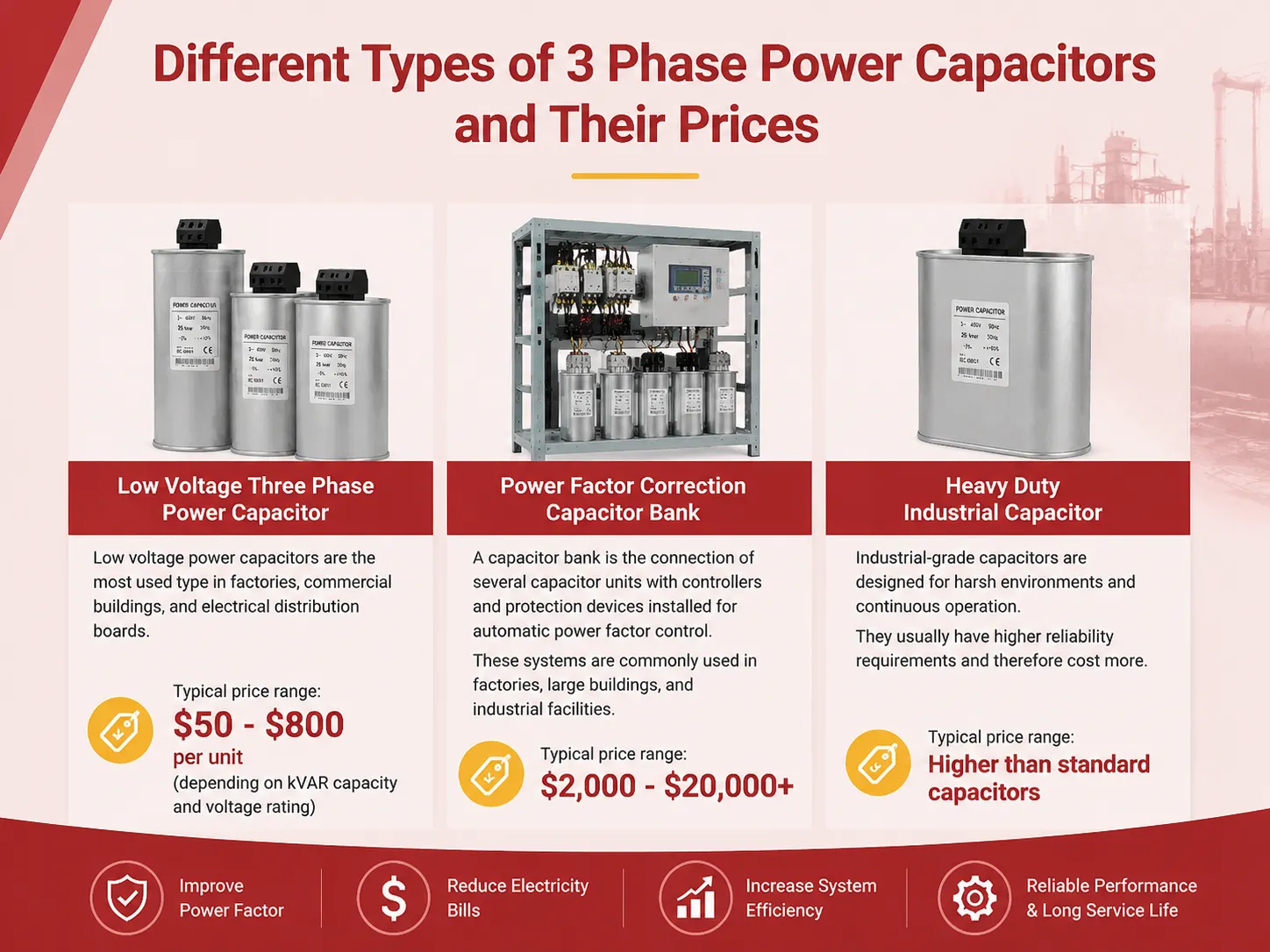
Different Types of 3 Phase Power Capacitors and Their Prices
Low Voltage Three Phase Power Capacitor
Pace of evolution and progress, low voltage power capacitors are the most used type of capacitor in factories, commercial buildings, and electrical distribution boards.
Typical price range: $50 – $800 per unit, depending on kVAR capacity and voltage rating.
Power Factor Correction Capacitor Bank
A capacitor bank is the connection of several capacitor units with controllers and protection devices installed for automatic power factor control.
Typical price range: $2,000 – $20,000+.
These systems are commonly used in factories, large buildings, and industrial facilities.
Heavy Duty Industrial Capacitor
Industrial-grade capacitors are designed for harsh environments and continuous operation.
They usually have higher reliability requirements and therefore cost more.
3 Phase Power Capacitor Price by Application
| Application | Typical Product Requirement | Approximate Cost |
|---|---|---|
| Small commercial equipment | Low capacity capacitor | $50 – $300 |
| Factory motors | Medium kVAR capacitor | $200 – $1,500 |
| Manufacturing plants | Automatic capacitor bank | $3,000 – $20,000+ |
| Power distribution systems | Large industrial compensation system | $10,000+ |
Popular 3 Phase Power Capacitor Brands
It involves many companies, right from the big international electrical firms to niche capacitor manufacturers. Thus, the brand may impact the price, as various manufacturers offer different degrees of dependability and writing solutions.
Products purchased for industrial use are evaluated by clients based on the quality of the product, the durability of the product in use, its safety features, and the presence of technical assistance for the product.
Schneider Electric
Schneider Electric is one of the premier producers of electrical products in the world. Schneider Electric’s power factor correction systems include capacitors, capacitor banks, and energy management devices utilized in many commercial and industrial applications.
Typically, Schneider products fall into the mid-high pricing category due to its extensive service network and well-regarded reputation.
ABB
ABB offers power quality solutions that involve providing power factor correction capacitors as well as capacitor bank systems that cater to industrial facilities and energy infrastructure.
ABB three-phase power capacitors are primarily chosen for applications with high performance and longevity.
Eaton
Eaton offers electrical safety solutions and power management products that include devices for reactive power compensation.
The products manufactured by Eaton have found applications in commercial buildings, factories, and industrial electrical systems.
TDK Electronics
TDK Electronics is a reputable entity specializing in electronic equipment and capacitors in the sphere of industry and energy usage.
TDK capacitors are commonly preferred for their consistent performance and superior manufacturing process.
In addition to global manufacturers, several local capacitor vendors offer economical options. The best selection for the buyer is determined by what types of specifications, operating environment, budget, and anticipated lifetime of the capacitor.
Why Do Prices Differ Between Brands?
When comparing prices across varying 3-phase capacitors, it is commonplace to observe vast discrepancies in the pricing of products offered by different manufacturers. The discrepancies arise mainly because of several different reasons.
- Material quality: Higher-quality dielectric materials and internal components usually provide longer service life.
- Manufacturing process: Advanced production technology and stricter quality control increase reliability.
- Safety features: Premium capacitors could have a better safety overpressure protection system, a self-healing feature, an improved heat tolerance performance.
- Technical support: Global brands often include stronger engineering support and warranty services.
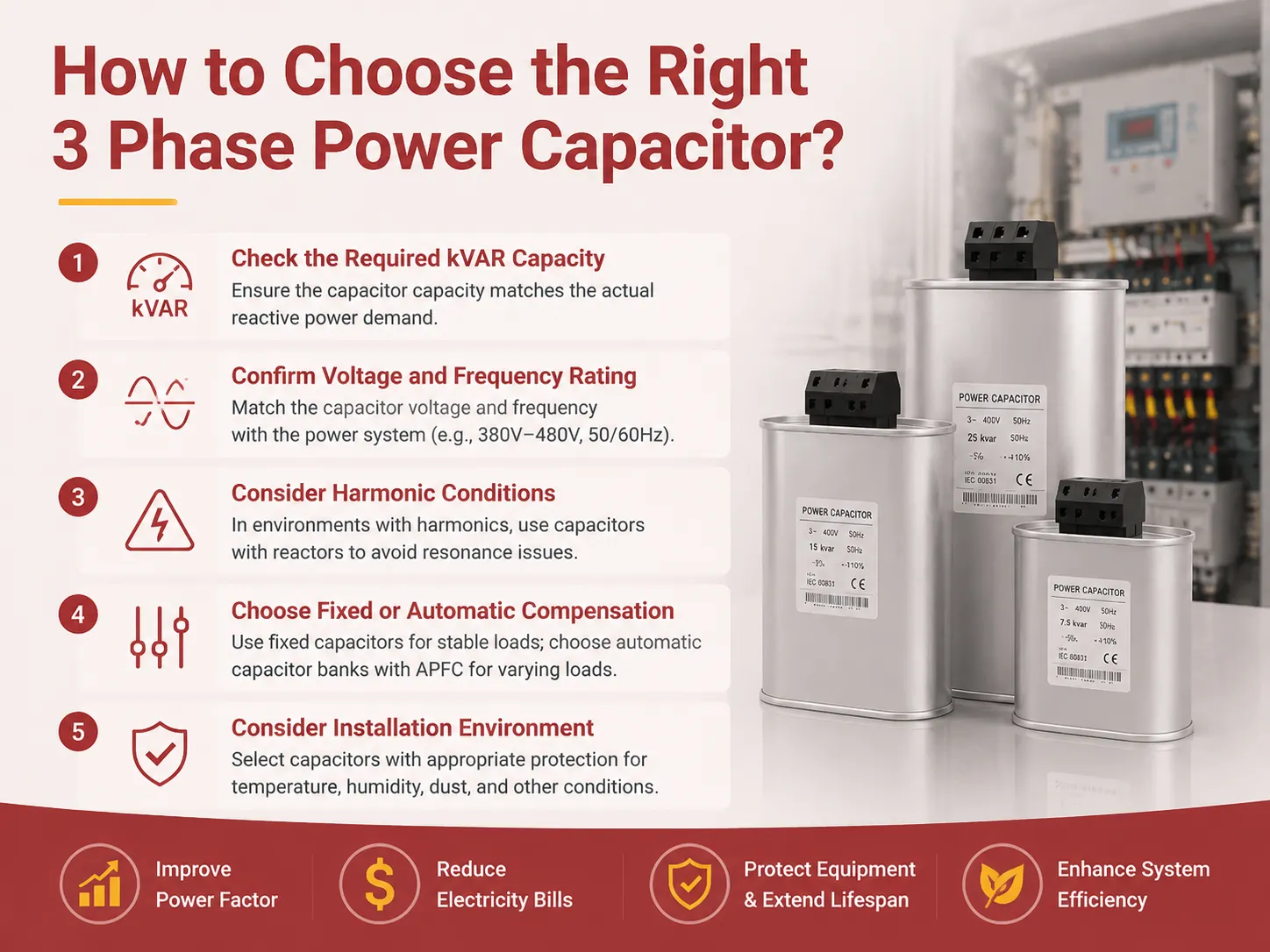
How to Choose the Right 3 Phase Power Capacitor?
Selecting the appropriate three-phase power capacitor involves more than just looking at the price. The capacitor has to correspond to the power system and the real reactive power demand.
1. Check the Required kVAR Capacity
The first step is determining how much reactive power compensation is required.
Using a capacitor with inadequate capacity cannot solve the power factor issue, while an oversize capacitor may cause overcompensation and lead to excessive expenses.
2. Confirm Voltage and Frequency Rating
The capacitor voltage rating must match the electrical system voltage.
Some typical industrial systems consists of three-phase systems of 380V, 400V, 440V, and 480V. Additionally, the operating frequency that should be taken into account is not less than 50Hz and not more than 60Hz.
3. Consider Harmonic Conditions
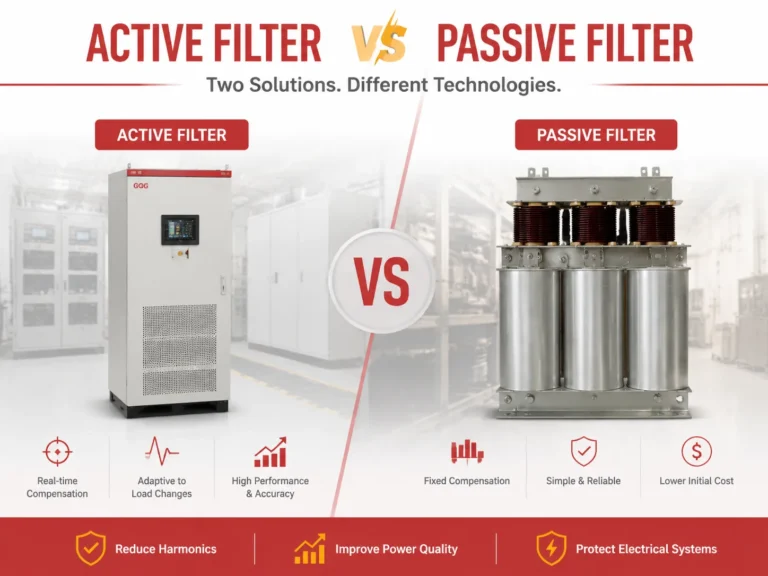
Today, industrial manufacturing facilities usually make use of variable speed drives, welding machinery, and power electronics that produce harmonics.
In such cases, a regular capacitor may be insufficient, therefore a capacitor system with reactors could be necessary to avoid resonance issues.
4. Choose Fixed or Automatic Compensation
A fixed three phase power capacitor is suitable when the electrical load remains stable.
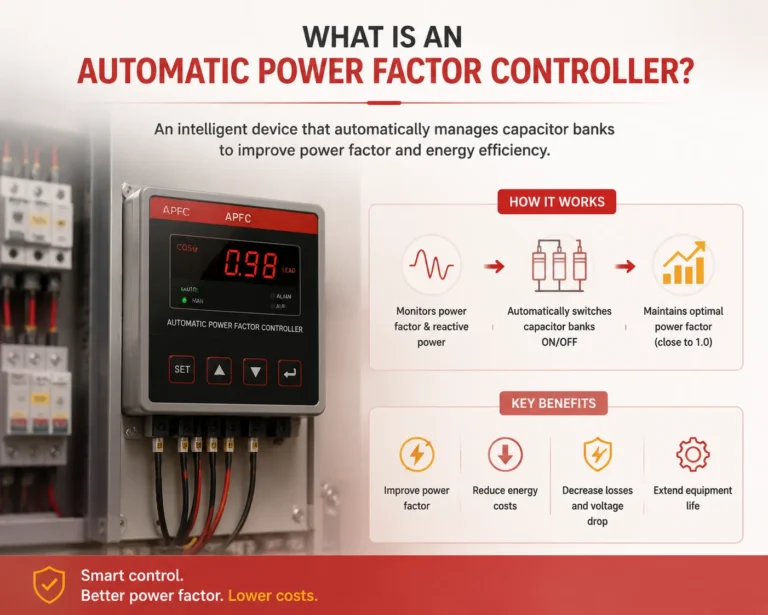
In situations with regularly varying load levels, an automatic power factor correcting capacitor bank equipped with an APFC controller would be a preferable alternative since it facilitates automatic compensation adjustment.
5. Consider Installation Environment
Temperature, humidity, dust, and operating conditions can affect capacitor performance.
Industrial environments may require capacitors with stronger protection and higher durability.
Installation and Maintenance of 3 Phase Power Capacitors
An accurately installed capacitor may operate efficiently over a considerable period of time; however, improper choice and bad upkeep may negatively influence its effectiveness and durability.
Important maintenance practices include:
- Regularly checking capacitor temperature and physical condition.
- Inspecting terminals and connections for overheating.
- Monitoring power factor performance after installation.
- Checking capacitor swelling, leakage, or abnormal noise.
- Replacing damaged components promptly.
The timing of regular inspection of large industrial capacitor banks is essential as capacitor failure can impact the entire electrical distribution system.
Where to Buy a 3 Phase Power Capacitor?
A 3 phase power capacitor can be purchased from several sources, including:
- Electrical equipment manufacturers
- Authorized distributors
- Industrial automation suppliers
- Professional capacitor system manufacturers
When purchasing, buyers should provide technical information such as:
- Voltage level
- Required kVAR capacity
- Frequency
- Application type
- Installation environment
By supplying the right system data, vendors can determine which capacitor to use so that there are no avoidable replacement expenses.
Frequently Asked Questions About 3 Phase Power Capacitor
What is a power capacitor?
Power capacitors are used for the reactive power compensation in AC systems. It works by storing energy and supplying it at appropriate moments so that the power factor is improved and unwanted reactive power is minimized.
Do I need a power capacitor?
The necessity of a power capacitor arises when there are numerous inductive loads like motors, pumps, motors, and transformers in the electrical system concerned and also when there is low power factor, increased electricity bills, and decreased efficiency of the system.
Do I need a capacitor for a 1000 watt amp?
A capacitor may not always be required for a 1000 watt power amplifier. The requirement for a capacitor is based on the specification of the vehicle’s electrical system including the power of the battery, the output power of the alternator, and the size of the wire used. Additionally, automotive capacitors differ from industrial three-phase capacitors in that they are primarily used for power factor correction.
What is the difference between a power capacitor and a capacitor?
A capacitor can be defined as a standard electronic component used to store electrical power, while a power capacitor is made pretty specifically for high-power electrical systems that include applications, such as voltage support, power factor correction, and reactive power compensation.
References and External Resources
- Schneider Electric — Provides electrical distribution products and power factor correction solutions for industrial and commercial applications.
- ABB — Offers power quality solutions and capacitor systems for energy and industrial applications.
- Eaton — Provides electrical power management and protection solutions.
- TDK Electronics — Manufacturer of electronic components and capacitor technologies.
- U.S. Department of Energy — Provides resources related to industrial energy efficiency and electrical system optimization.
Conclusion
The price of a 3 phase power capacitor can vary widely depending on capacity, voltage rating, brand, and application requirements. Small capacitor units may cost only tens or hundreds of dollars, while complete industrial capacitor bank systems can require thousands of dollars in investment.
For buyers, the lowest price is not always the best choice. Selecting the right capacitor requires understanding the electrical load, required kVAR compensation, operating environment, and future system needs.
Whether you need a single three phase power capacitor for equipment correction or a complete power factor correction system for an industrial facility, choosing a properly designed solution can improve energy efficiency, reduce operating costs, and create a more reliable electrical system.